Kilburn Park gardeners top tips for small city gardens
Small city gardens can be brilliant little spaces, but they can also feel awkward, shaded, overlooked, windy, and just plain tight. If you live in or around Kilburn Park, you'll know the feeling: one minute you're picturing a leafy retreat, the next you're trying to fit in a table, a bit of privacy, some planting, and a patch of lawn that does not look tired by July. The good news? With the right approach, even a modest urban garden can feel calm, useful, and genuinely lovely.
This guide brings together practical Kilburn Park gardeners top tips for small city gardens, shaped around the realities of London plots: limited width, tricky light, shared boundaries, containers, hard surfaces, and a need for low-fuss structure. You'll find clear steps, expert judgement, common mistakes, and a few design ideas that really work in compact spaces. Let's make the garden feel bigger than it is.
Table of Contents
- Why small city garden tips matter in Kilburn Park
- How the approach works in compact urban gardens
- Key benefits and practical advantages
- Who this is for and when it makes sense
- Step-by-step guidance
- Expert tips for better results
- Common mistakes to avoid
- Tools, resources and recommendations
- Law, compliance, standards, or best practice
- Options, methods, or comparison table
- Case study or real-world example
- Practical checklist
- Conclusion
- Frequently asked questions
Why Kilburn Park gardeners top tips for small city gardens Matters
City gardens are not just smaller versions of suburban ones. They behave differently. You may have more shade from buildings, drier soil near walls, more wind tunnelling down a side return, and less room for error. A plant that looks beautiful in a roomy plot can become a floppy, unhappy mess in a compact courtyard. That's why the best advice is not about cramming more in; it's about choosing smarter, lighter, and more resilient solutions.
In a place like Kilburn Park, a small garden often has to do several jobs at once. It may need to be a quiet coffee spot, a space for herbs, a play area, a drying area, and somewhere that still looks presentable from the kitchen window. Truth be told, that's a lot to ask from a few square metres. But with layered planting, tidy edges, and the right hard landscaping, it can absolutely be done.
There's also the simple matter of maintenance. A cramped garden becomes messy quickly if it is overplanted or poorly zoned. One climbing plant too many, one hedge left untrimmed, and suddenly the whole space feels smaller. If you want a space that stays enjoyable rather than becoming another weekend chore, you need structure first and decoration second. That's the real local lesson.
How Kilburn Park gardeners top tips for small city gardens Works
The core method is straightforward: divide the garden into functions, then design each part to earn its keep. Instead of thinking, "How do I fit everything in?", ask, "What do I actually need this garden to do?" That shift changes everything.
Here's the logic most experienced gardeners use in compact urban spaces:
- Start with boundaries so the space feels contained and calm.
- Use vertical space to grow up rather than out.
- Choose multi-tasking plants that provide texture, privacy, colour, or scent.
- Keep paths and seating simple so the garden remains easy to move through.
- Reduce high-maintenance surfaces that collect weeds, stains, or clutter.
- Plan for seasonal change so the space looks good all year, not just in May.
That approach works because small gardens magnify every decision. A well-placed trellis can create height and privacy. A narrow bench can turn a dead corner into a reading spot. A strip of ground cover can soften paving and stop the whole garden looking like a patio with aspirations. Small moves. Big effect.
If your garden feels a bit chaotic already, it may help to think in layers: ground level, mid-level, and upper level. That's one reason many people pair low-growing planting with climbers and a couple of compact shrubs. The eye moves around the space more naturally, and the garden feels deeper than it is.
Key Benefits and Practical Advantages
A well-planned small city garden is not just prettier. It works harder for you. Here are the benefits most people notice first.
- More usable space: good layout means you can actually sit, plant, and move without squeezing past pots.
- Lower maintenance: fewer awkward gaps and better planting choices make routine care easier.
- Better privacy: screens, climbers, and smart hedge choices reduce the "on display" feeling many city gardens have.
- Improved biodiversity: pollinator-friendly plants and layered planting support more wildlife.
- Better year-round appeal: evergreen structure stops the garden going flat in winter.
- Higher comfort: a small space can still feel restful if the design is coherent.
One subtle advantage gets missed a lot: a small garden with good structure actually feels easier to keep tidy. That's a huge win. If you've ever spent half a Saturday chasing leaves, moving pots, or cutting back one rampant climber that has decided to own the fence, you'll appreciate this. A clear design saves time.
For many households, there is also a value in creating a garden that supports day-to-day life. You might want herbs near the door for cooking, or a hard-wearing patch beside seating, or a safe and simple layout for children. If that sounds familiar, you may also find ideas in container gardening for compact spaces and vertical gardening ideas that grow up, not out.
Who This Is For and When It Makes Sense
This advice is for anyone dealing with a modest outdoor space and wanting it to feel more intentional. That includes flat owners with roof-level terraces, terraced houses with narrow back gardens, basement homes with light limitations, and family gardens that need to work hard without becoming chaotic.
It makes sense especially when:
- your garden is overlooked and you want more privacy;
- the space is shaded for part of the day;
- you want a low-maintenance layout rather than a high-effort display;
- you need room for children, pets, or outdoor dining;
- your garden has poor soil or lots of hard landscaping;
- you want seasonal interest without constant replanting.
It also suits people who are new to gardening. There's no shame in keeping things simple. In fact, beginners often do better in small gardens because feedback is quicker. If one plant is unhappy, you notice fast. If a layout works, you feel the benefit immediately. If you want a softer start, these beginner-friendly gardening tips are a helpful companion read.
And if your garden is not just small but also a little neglected, don't worry. That's common. A compact space is often easier to revive than people think. You can reshape it in stages, which is often the best way anyway.
Step-by-Step Guidance
Here's a practical way to approach a small city garden without making it feel like a design exam.
1. Measure the space properly
Start with real dimensions, not guesswork. Measure the full garden, note any awkward angles, record where the sun falls, and mark out doors, drains, steps, and shared boundaries. A few rough notes are better than none, but if you're planning anything substantial, proper measurements save a lot of grief later.
2. Decide on the garden's main job
Will the space mainly be for relaxing, growing plants, entertaining, or family use? Small gardens can do more than one job, but one should lead. If entertaining matters most, keep circulation clear. If planting matters most, give the borders more depth. If privacy is the priority, start with screening.
3. Simplify the hard surfaces
Too much paving can make a small garden feel stark and hot in summer. Too many tiny paving cuts can make it feel fussy. Aim for a clean, practical balance. A compact patio, a slim path, or a small seating zone is often enough. You'll notice the difference straight away.
4. Add vertical structure
Use walls, fences, trellises, and obelisks to lift the eye. Climbers are especially useful in city gardens because they give height without taking floor space. For shady corners, some evergreen climbers can be very effective. If the fence line is a bit bare, take a look at evergreen climbers for shaded hideaways for ideas that suit tighter sites.
5. Build planting in layers
A small space looks richer when you mix heights and textures. Use low edging plants, then mid-height perennials or shrubs, then a vertical feature. This layered effect creates depth and makes the garden feel fuller without becoming overcrowded.
6. Choose plants that behave well
In compact gardens, plant behaviour matters as much as plant beauty. Look for varieties that stay within bounds, tolerate containers or partial shade, and don't need constant deadheading or staking. A plant that sprawls everywhere may be lovely in theory, but in a small plot it can become a bully. Gardens have enough drama already.
7. Keep a clear maintenance rhythm
Set a simple routine: water, check for weeds, deadhead, and tidy edges. Small gardens look best when they are lightly managed, not overworked. One steady hour every week often beats a heroic rescue mission once a month.
8. Finish with one focal point
This might be a bench, a pot cluster, a small tree, or a statement planter. Just one. The focal point gives the eye a place to rest and helps the whole garden feel intentional rather than filled by accident.
Expert Tips for Better Results
Here are the details that make a small city garden go from fine to genuinely satisfying.
- Use repeat planting. Repeating a few plant shapes creates calm. It looks more considered than scattering many unrelated species everywhere.
- Choose larger pots rather than lots of tiny ones. Bigger containers hold moisture better, look neater, and are less fiddly to water. Smaller pots are cute. Also a bit needy.
- Keep colour palettes restrained. A few coordinated colours make a compact garden feel polished. Too many bright tones can shrink the space visually.
- Think about winter first. A garden that looks good in January is usually a garden with good bones. Evergreens, bark, structure, and evergreen foliage matter more than people expect.
- Use scent near seating. Herbs and fragrant flowering plants add pleasure right where you sit, which is a simple but powerful trick.
- Allow breathing room. Empty space is not wasted space. In small gardens, a little openness is what makes planting feel luxurious rather than crowded.
If you're dealing with weeds, don't treat them as an afterthought. In a tight plot, they spread and show up quickly. A clear edging plan, mulch, and regular hand weeding are still the most dependable basics. For a deeper look, weed control in three essential moves is a solid practical read.
Another expert-level point: be cautious with ivy. It can be handsome in the right place, but it is not always a friendly neighbour to fences, walls, or small plots. If it is already taking over, this guide to stopping ivy invasions is worth a look before it becomes a weekend-eating monster.
Common Mistakes to Avoid
Small city gardens are forgiving in some ways, but they also expose mistakes quickly. A bad layout or the wrong planting choice will show itself in a season, sometimes faster.
- Overcrowding the plot: more plants do not automatically create a better garden. Often the opposite.
- Ignoring drainage: city gardens often have hard surfaces and compacted soil. Standing water is a warning sign, not a feature.
- Using plants that outgrow the space: a shrub that needs constant reduction can become a burden.
- Making every corner a "feature": too many features make the garden feel busy and smaller than it is.
- Choosing maintenance-heavy materials: some decorative finishes look great for a month and then demand endless attention.
- Forgetting shade patterns: London gardens can change dramatically through the day. Planting without checking light conditions is a common mistake.
Another easy trap is designing for a photograph rather than for real life. Yes, a rattan corner sofa under string lights can look lovely. But if it blocks access to the compost bin and takes over half the garden, you'll stop enjoying it pretty quickly.
The best gardens work in motion, not just in still images. They feel good as you walk through them, open the back door, water the pots, or sit down with a mug on a grey morning.
Tools, Resources and Recommendations
You do not need a shed full of gadgets. A small garden rewards a compact, dependable toolkit.
- Sharp hand pruners for tidy cuts on herbs, perennials, and small shrubs.
- Long-handled loppers for tougher stems and awkward corners.
- A good watering can or hose with a gentler rose to avoid blasting containers dry.
- Gloves with a decent grip for pruning, clearing, and dealing with prickly bits.
- Spade or border fork for improving soil and lifting tired plants.
- Multipurpose container mix and mulch to support healthy roots and moisture retention.
If you're planning a refresh, a few related ideas may help: tool essentials for the dedicated gardener, enriching soil with organic waste, and herb gardens for beginners all support a small-garden mindset very well.
Resources matter too. If your garden is tired, start with soil health before buying lots of plants. If the boundaries are messy, sort them before adding decoration. And if you are not sure whether to trim, replace, or rework something, that uncertainty is often a signal to seek a bit of professional input rather than guessing.
Law, Compliance, Standards, or Best Practice
For most small garden projects, the main concern is not red tape; it is doing things safely, neatly, and with respect for neighbours and shared boundaries. Still, a few best-practice points are worth keeping in mind.
If you are working near fences, walls, trees, or shared access routes, take care with pruning and clearance. In city gardens, overhanging growth can become a neighbour issue quickly, especially where space is tight. It is wise to keep pruning measured and avoid entering someone else's land without permission.
For hard landscaping, drainage and runoff should be considered before any major change. A garden that floods, puddles, or pushes water towards a boundary is a problem waiting to happen. The exact rules can vary depending on the scale of the work, but sound drainage and sensible construction are always the right starting point.
When using tools, pesticides, or heavy materials, basic safety best practice applies: store products properly, wear suitable gloves and eye protection where needed, and keep paths clear. If children or pets use the space, plan with them in mind. A neat garden is lovely; a safe one is better.
For larger changes, especially anything involving trees, boundary structures, or significant landscaping, it is sensible to check what permissions or professional checks might be needed before work starts. That is less about bureaucracy and more about avoiding expensive mistakes later.
Options, Methods, or Comparison Table
In a small city garden, the right approach depends on what you want most. Here is a simple comparison of common methods.
| Method | Best for | Pros | Trade-offs |
|---|---|---|---|
| Container gardening | Poor soil, renters, flexible layouts | Easy to rearrange, good control over compost and watering | Needs regular watering and feeding |
| Vertical planting | Narrow gardens, privacy, walls and fences | Saves floor space, adds height and softness | Can look cluttered if overdone |
| Ground-cover planting | Edges, borders, weed suppression | Softens paving, reduces bare soil, improves flow | Some types spread quickly if not chosen carefully |
| Low-maintenance hard landscaping | Busy households, seating zones, easy access | Simple, durable, tidy | Too much hard surface can feel stark |
| Mixed layered planting | Most city gardens | Rich, full, and visually deeper | Needs a bit more design judgement |
If you are choosing between these, go back to your main goal. A garden built for entertaining will not be laid out the same way as one built for quiet planting or child-friendly play. If you need ideas for privacy, quick-growing hedge ideas can be useful, while child-friendly yard design may suit family homes better.
Case Study or Real-World Example
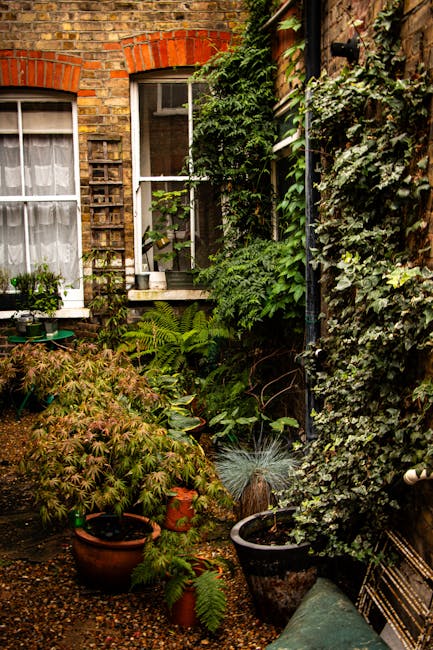
A typical Kilburn Park-style garden might be a narrow back space behind a terrace with one shaded boundary, a worn patch of lawn, and a few tired pots near the back door. On paper, it sounds limited. In practice, it is often full of possibilities.
In one common redesign scenario, the first step is to clear out the clutter and define a simple route from the door to the back of the garden. Next comes a compact seating area, maybe just a bench with a small side table rather than a full dining set. The side fence gets a trellis, then a climber. The darkest corner gets something evergreen so it does not disappear in winter. A run of herbs sits near the kitchen, because if you have to walk ten metres in the drizzle for rosemary, you probably will not use it much. Human nature, really.
By keeping the planting disciplined and the furniture scaled correctly, the whole garden starts to feel wider. The eye travels. The garden breathes. Even a small courtyard can give that "ah, nice" feeling when you step outside with a cup of tea on a bright Saturday morning.
This is also where professional garden maintenance can make a big difference. Regular tidying, hedge work, mowing, or border renovation stops the space slipping back into stress. A garden does not need to be perfect. It just needs to feel looked after.
Practical Checklist
Use this before you start, or before you make another round of changes.
- Have I measured the space accurately?
- Do I know the main purpose of the garden?
- Have I checked the light and shade at different times of day?
- Am I using vertical space where it makes sense?
- Have I chosen plants that suit containers, shade, wind, or limited room?
- Is there enough open space to move comfortably?
- Have I limited the number of different materials and colours?
- Is drainage going to cope after heavy rain?
- Do I have a simple maintenance routine I can realistically stick to?
- Have I left room for seasonal changes, not just summer display?
If you tick most of those boxes, you are in good shape. If not, that is fine too. Gardens are iterative. Very few get everything right on the first go.
Conclusion
Small city gardens ask for restraint, creativity, and a bit of patience. The trick is not to fill every gap, but to shape the space so it feels easy to live with. Good structure, sensible planting, clean lines, and a few carefully chosen features can transform even the tightest plot into something that feels private, useful, and quietly uplifting.
For Kilburn Park households, the best results usually come from practical choices rather than flashy ones. Keep the layout simple. Let the planting do the talking. Use height where floor space is limited. And remember: a small garden that works beautifully is worth far more than a bigger one that constantly annoys you.
If you want help turning a compact outdoor space into something more polished, more manageable, and a bit more special, the next step is straightforward.
Get a free quote today and see how much you can save.
And if you are still sketching ideas, that is fine. Start small, keep it honest, and build the garden one good decision at a time. That's usually how the nicest spaces happen.
Frequently Asked Questions
What are the best plants for a small city garden?
The best plants are usually compact, resilient, and useful in more than one way. Think herbs, small shrubs, climbers, ground cover, and perennials that give texture without taking over. If your garden is shady, choose plants that tolerate lower light rather than forcing sun-lovers into a difficult spot.
How do I make a small garden look bigger?
Use fewer materials, repeat plant shapes, add vertical features, and avoid overcrowding. A clear path and a simple focal point can make the space feel more open. Light-coloured surfaces help too, though not if they turn the garden into a blank box.
Is container gardening a good choice for Kilburn Park gardens?
Yes, especially where soil is poor or the layout needs to stay flexible. Containers are ideal for herbs, seasonal colour, and plants you may want to move around. The main thing is watering regularly and choosing containers big enough to support healthy roots.
How can I improve privacy in a small urban garden?
Use layered planting, climbers on trellises, and well-chosen hedges or evergreen screens. Privacy does not have to mean a solid wall of greenery. Sometimes a partial screen is enough to soften overlooking without blocking all light.
What are the easiest low-maintenance ideas for a small city garden?
Go for simple paving, durable planting, a few large pots instead of many tiny ones, and evergreen structure. Ground cover can also help reduce weeds and tidy up bare patches. The easiest garden is often the one with fewer separate jobs.
Should I keep a lawn in a small garden?
Only if you genuinely use it. In very small city gardens, lawn can be lovely, but it can also become a maintenance burden. Sometimes a smaller lawn or no lawn at all is the wiser choice, especially if you want more seating or planting space.
How often should I maintain a compact garden?
Little and often works best. A quick weekly tidy usually beats a big rescue job every few months. In practice, that means checking watering, removing weeds, deadheading, and making sure nothing is beginning to sprawl where it shouldn't.
What should I avoid in a tiny garden?
Avoid overcrowding, oversized furniture, too many different materials, and plants that grow aggressively without much control. Also avoid designing everything for one season. A good small garden should still feel decent in February.
Can a small garden still attract wildlife?
Absolutely. Pollinator-friendly flowers, climbers, herbs, and a bit of water can make a real difference. Even a very compact garden can support bees, hoverflies, and birds if it offers food, shelter, and some structure.
Do I need a professional gardener for a small urban space?
Not always, but professional help can be useful if the space is overgrown, awkward, or you want a more polished finish. A gardener can help with planning, soil improvement, hedge work, and maintenance, which is often where the biggest gains happen.
What time of year is best to redesign a small city garden?
Autumn and spring are usually the most practical times for planting and redesign work. That said, planning can happen any time of year. Sometimes the best first move is simply clearing, measuring, and deciding what the space should actually do.
How do I stop a small garden from feeling cluttered?
Use fewer focal points, repeat materials, and keep the planting plan disciplined. Clutter often creeps in through pots, ornaments, and furniture more than through the plants themselves. If something is not adding use or beauty, it may be taking up too much visual space.